

The resources linked to in this article offer a well-grounded interpretation of western history that blames an ancient secretive trading cult for most of the world’s ills. It provides an overview of how the Phoenician Empire operated in ancient times and how Punic loyalists avenged the destruction of Carthage by surreptitiously taking control of Rome.
If, as we claim, the Roman Empire really was just a Latinized version of the same Phoenician Empire that controlled Mediterranean trade since the Bronze age, it would explain a great many things about our modern world.
While the article focuses mainly on a revisionist view of ancient history, its final section links to information about more recent Phoenician activities. There is much more to say about Phoenician secret societes that have been the hidden force behind every maritime empire since the fall of Rome, but for now we are just providing a necessary perspective to help explain how their occult networks operate.
Several of the podcasts linked to in this article attempt to explain the manipulative methods Phoenician used to control people and hold onto power. This is necessary, because their cynical techniques are incomprehensible to many people. The Romans used the term “Punic Faith” as an insult to denote Phoenician treachery, perfidy, and deceit. The Romans understood their foe, but they lost their country anyway, and we don’t even understand the enemy.
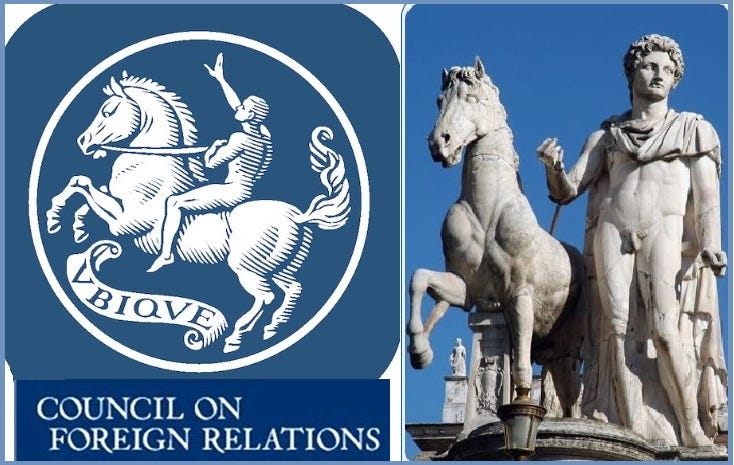
Phoenicians Ubique (Everywhere)
The theory that the Phoenicians never disappeared and have been exerting hidden influence over world affairs for millenia may seem far-fetched, but it is difficult to disprove. This is because Phoenician symbolism and evidence of their dominance is hidden everywhere in plain sight.
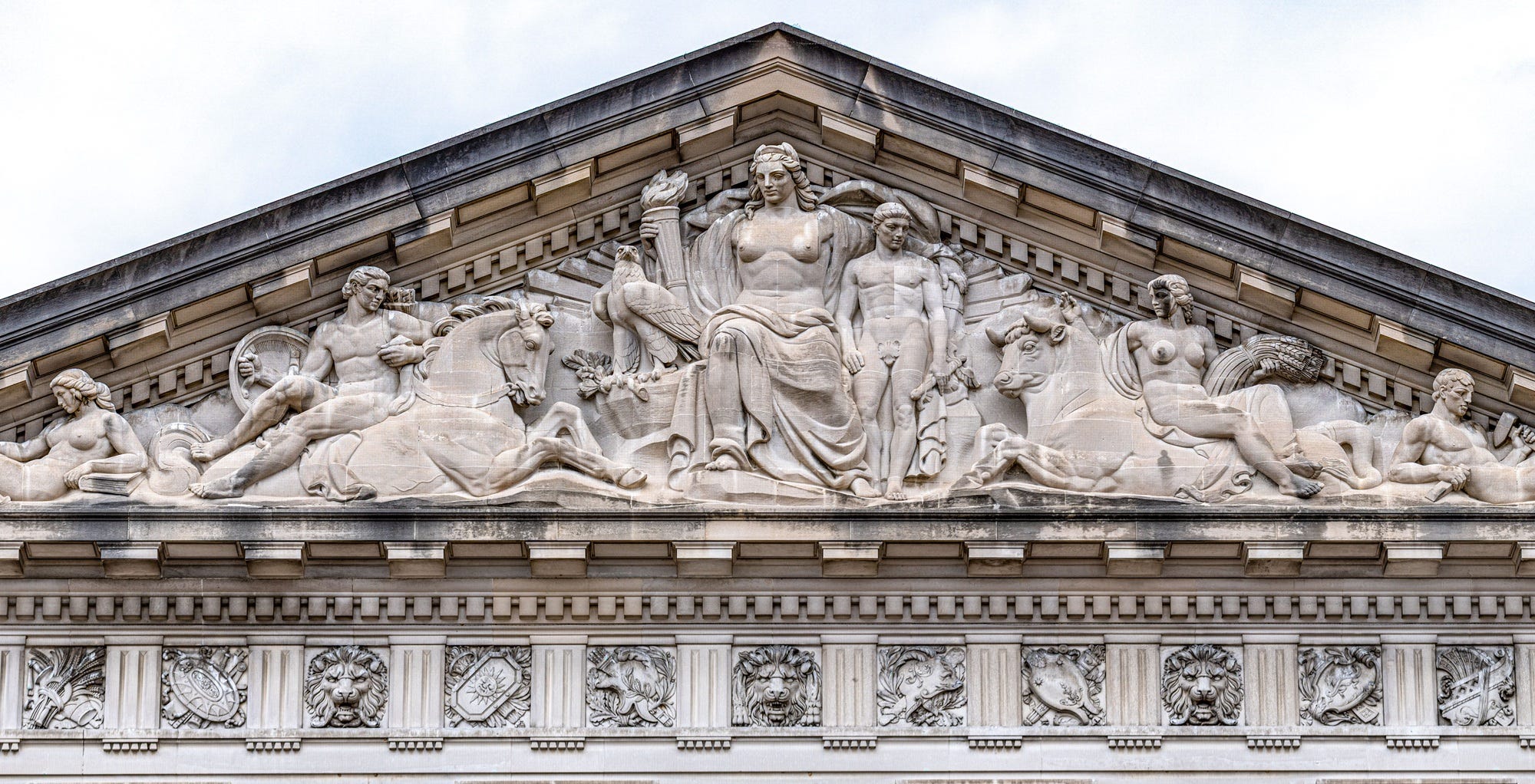
Obelisks, eagle standards, the pillars of Hercules, and the “all-seeing-eyes” are Phoenician symbols. The Tophet Offering statue in front of the National Archives is Phoenician. The statuary above the Mellon Auditorium in Washington DC, celebrating child rape is Phoenician. And Freemasonry is riddled with Phoenician symbolism, top to bottom. Even the American Flag, with its red and white stripes and field of stars, is awash in Phoenician symbolism.
Given that many of America’s founding fathers were Freemasons, it is not difficult to see how profoundly crypto-Phoenicians have influenced the United States. But Freemasonry is only part of an even more insidious network. Virtually all international secret societies, fraternal orders, criminal sydicates, central banks, and intelligence agencies are part of a global network of Phoenician skullduggery.
There are signs all around us, but most people fail to see them because they have been told that Phoenicians all perished after the fall of Carthage and that they no longer exist. They are told that the powerful empire that invented the alphabet, dominated trade in the Mediterranean for over a thousand years, and hid esoteric knowledge and secret technologies for centuries, disappeared without a trace. But it didn’t.
Phoenicians still live among us, but they exist as a hidden network worldwide, controlling world events from behind the scenes, governing secret societies, and hoarding gold and power, while encouraging conflict and rebellion throughout the world. They set countries against each other, profit from wars, and keep people divided by race, religion, and class. Their purpose is to incite conflict and make people fearful, so they will remain ignorant, distracted, and easily controlled.
Recognizing Signs, Overcoming False Narratives
Once you realize that Phoenicians never left the world stage, you begin to recognize signs of their influence—and you cannot “unsee” them. In the diagram shown below, the Spanish coat of arms, which was embossed on the Spanish silver dollar, includes the Phoenician pillars of Hercules, with “snakes” wrapped around them.

The pillars of Hercules are an important Phoenician symbol. Hercules is identified with their primary God Melqart, and for 1000 years before the Roman era, Phoenicians controlled the straight of Gibraltar. The two pillars of Freemasonry also represent the pillars of Hercules, and it is this same Phoenician emblem, two pillars wrapped in a S-snake, that Americans have adopted as a dollar sign.
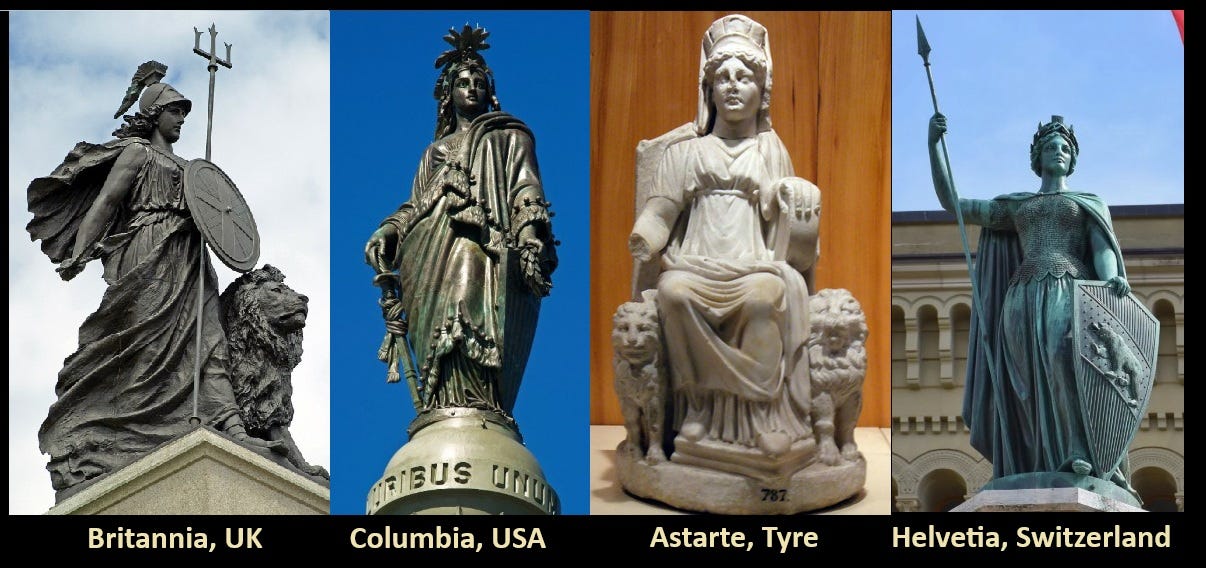
Likewise the personification of the United States as a pagan goddess, “Columbia” is Phoenician. Many countries have them. The United Kingdom is represented as Britannia. Switzerland has Helvetia. The French Revolution was personified by Marianne. Yet no Christian would ever conceive of a pagan goddess to represent their country. The whole idea of a pagan goddess as a national icon is Phoenician.
The goddess Columbia provides a way for Phoenicians to honor their Goddess Astarte (also known as Isis or Cybele), under patriotic cover. It is for this reason, that a statue of Columbia adorns the United States Capital building, and Washington is referred to as the District of Columbia. As “insiders” know, the jokes on us.
Keeping Secrets—A Phoenician Obsession
Only the small secrets need to be protected. The large ones are kept secret by public incredulity. — Marshall McLuhan
Many proofs of Phoenician influence are easily verified. What is difficult to believe is not the evidence of ongoing Phoenician influence in political affairs—that is obvious, once you recognize the signs. What is difficult to comprehend is the astonishing perfidy of our trusted cultural gate-keepers—those who control our schools, libraries, universities, civic institutions, and even our language.
How could they have kept this secret? Are they all “in-on-it?”
They have put forth false narratives, controlled the meaning of words, reframed reality, and systematically hidden evidence of Phoenician conspiracies, occult symbolism, secret societies, and pernicious commercial monopolies from the memory of men. Even as they told us exactly what they were doing and why.
“. . .We shall erase from the memory of men all facts of previous centuries which are undesirable to us and leave only those which depict all the errors of the government of the GOYIM.”
— Protocols of the Elders of Zion. #16.
It is mind-boggling that such perfidy and systematic deception is possible, and that our trusted institutions have been brainwashing us with false heroes and fabricated histories for our entire lives. That is the difficult pill to swallow. That is why so many people reject the evidence before their eyes.
But Secrecy is the Phoenician way of life. It is the whole basis of their power. And if you are reading this, you are helping to expose their secrets and undermine their stranglehold on humanity.
Part I: Phoenician Fundamentals
This section provides links to essential information about the Phoenician Empire of Ancient times. The most important is the link to the the Phoenicians Among Us Podcast (part 1), wherein Peter Duke and his guest Mrs. Heritage History expose how the Phoenician cult has always operated, and how it hides itself, but we provide several other resources as well.
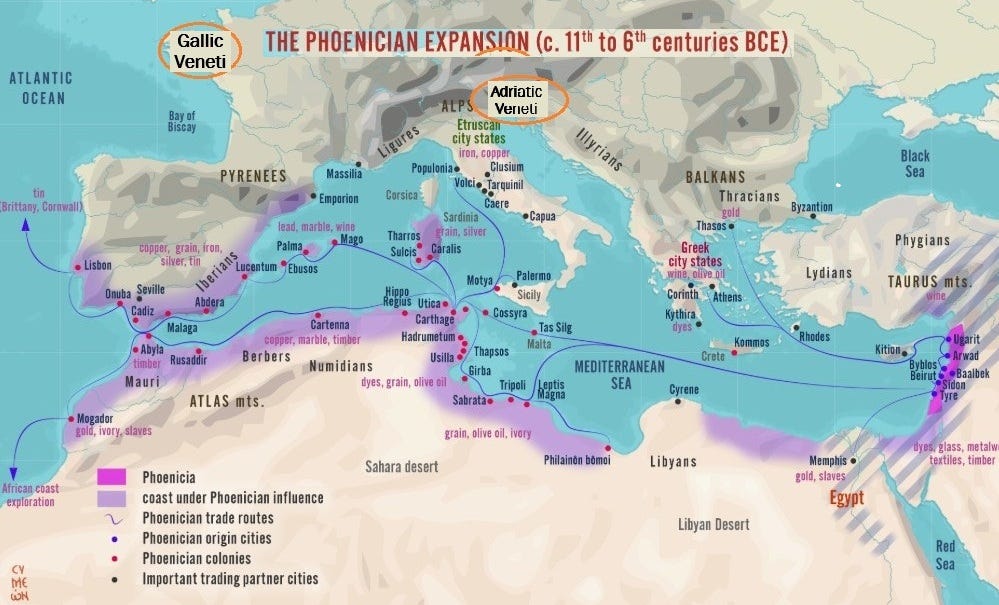
For those with very limited knowledge about the Phoenicians, the Heritage History website also provides some introductory articles. Many people don’t even realize that the Tyrians of the Bible, the Carthaginians of the Punic Wars, and the sophisticated civilization that invented the alphabet, and controlled bookmaking in the ancient world were all Phoenicians. The following HH pages are short, easy to understand introductions.
Ancient Rome—The Phoenicians This page is part of the HH Ancient Rome curriculum and was written at a high school level. It covers the essential, uncontroversial aspects of Phoenician history.
Phoenicians and the Ancient World This page is from the Hidden History section of the Heritage website. It presents a more complex, conspiratorial view of the Phoenicians. It addresses topics such as 1) What really happened to the Phoenicians, 2) Secret Societies, 3) Secret Knowledge, 4) The Phonician Roman Empire.
Phoenicians Among us (Part I)—Podcasts
The Phoenicians Among Us video series goes into much more detail than the articles listed above. They feature discussions between MHH and Peter Duke concerning many aspects of the Phoenician cult that are essential to understanding how it operates. The video also provides background on Mrs. Heritage History and her approach to studying the Phoenicians.
Topic covered include:
4:00 Introduction to MHH and her interest in Phoenicians and secret societies.
27:00 Freemasonry is Phoenician, and the Purpose of Phoenician Rituals.
31:30 Introto the HH Website, Letter of Complaint by Offended Phoenician
38:30 Venn diagram of Phoenicians/Maritime Empires/Secret Societies
44:30 Bronze Age Trade, Advanced Civilizations, Secret Knowledge (pre 1200 BC)
53:20 The Phoenician Empire (1200 BC – 200 BC)
1:08:00 The Destruction of Tyre (332 BC) and Carthage (146 BC)
1:20:00 The Fate of Cadiz—Ally of Caesar, Las Vegas of Roman Empire
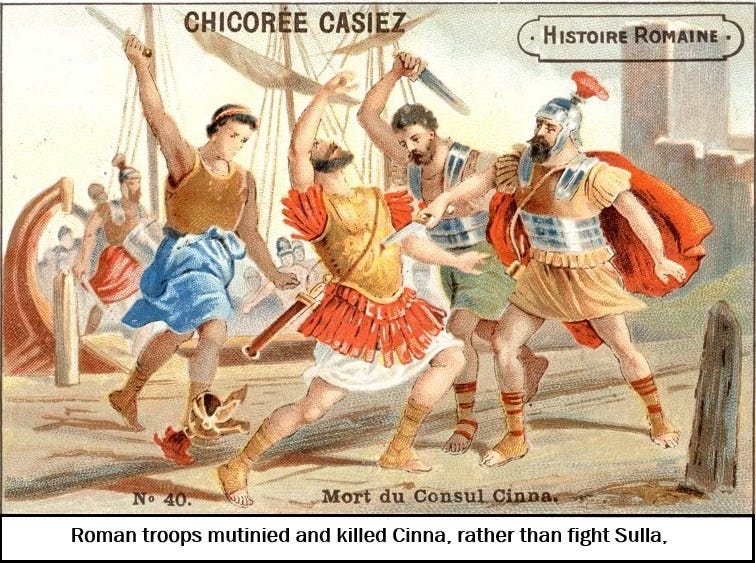
1:26:00 Phoenician Agents: Marius, Cinna, and Julius Caesar,
1:37:45 Maritime Empires, Secret Societies, Assets, Handlers, Review
Key Points from Phoenicians Among us (Part I):
— Phoenicians were a trading cult that was active during the Bronze Age, and they appear to have had access to advanced technologies from bronze age civilizations, and to have kept much much of this knowledge from the rest of mankind.
— The purpose of the appalling rituals of the Ancient Phoenicians, including human sacrifice, was cult-conditioning. Human sacrifice is still practiced among them.
— Freemasonry and virtually all Secret Societies are related to Phoenician intelligence and influence networks. They are used to recruit minions, many of who serve Phoenician purposes without full knowledge of cult secrets.
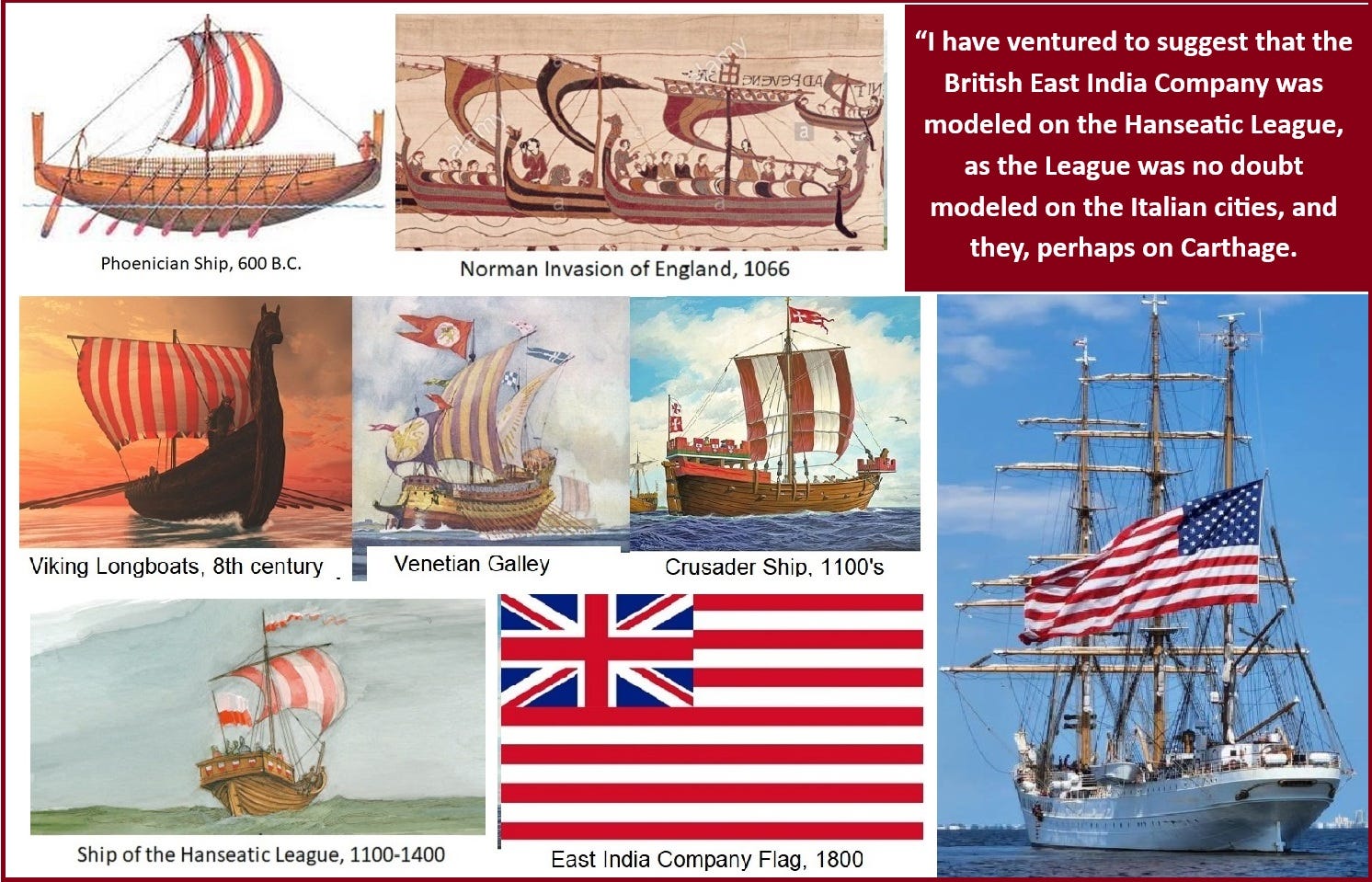
— All Maritime empires in western history have been controlled by Phoenician networks: Venice, Genoa, Hansaetic League, Spanish and Portugues Empires, the Triangular Trade, the Dutch and British East India Companies, etc.
— Phoenician bloodlines are carried on by the maternal line. This makes them difficult to trace and it is foundational to understanding how the network operates.
Part II: The Phoenician Roman Empire
One of the most important points made in the First Phoenicians Among Us video was that even when a major Phoenician port is destroyed most Phoenicians escaped with their books and valuables, and within a few years re-established new trading ports, libraries, and trade networks.
For example, just a decade after Tyre was destroyed (332 BC), Ptolemy (a Phoenician ally), took control of Egypt and once he was firmly on the throne, the displaced Tyrians built up Alexandria as the premier port in the Eastern Mediterranean.
Likewise, when Carthage was destroyed (146 BC), the residents abandoned the city, but Carthage trade was rerouted to other Punic ports, and many Phoenician cities made peace with Rome.
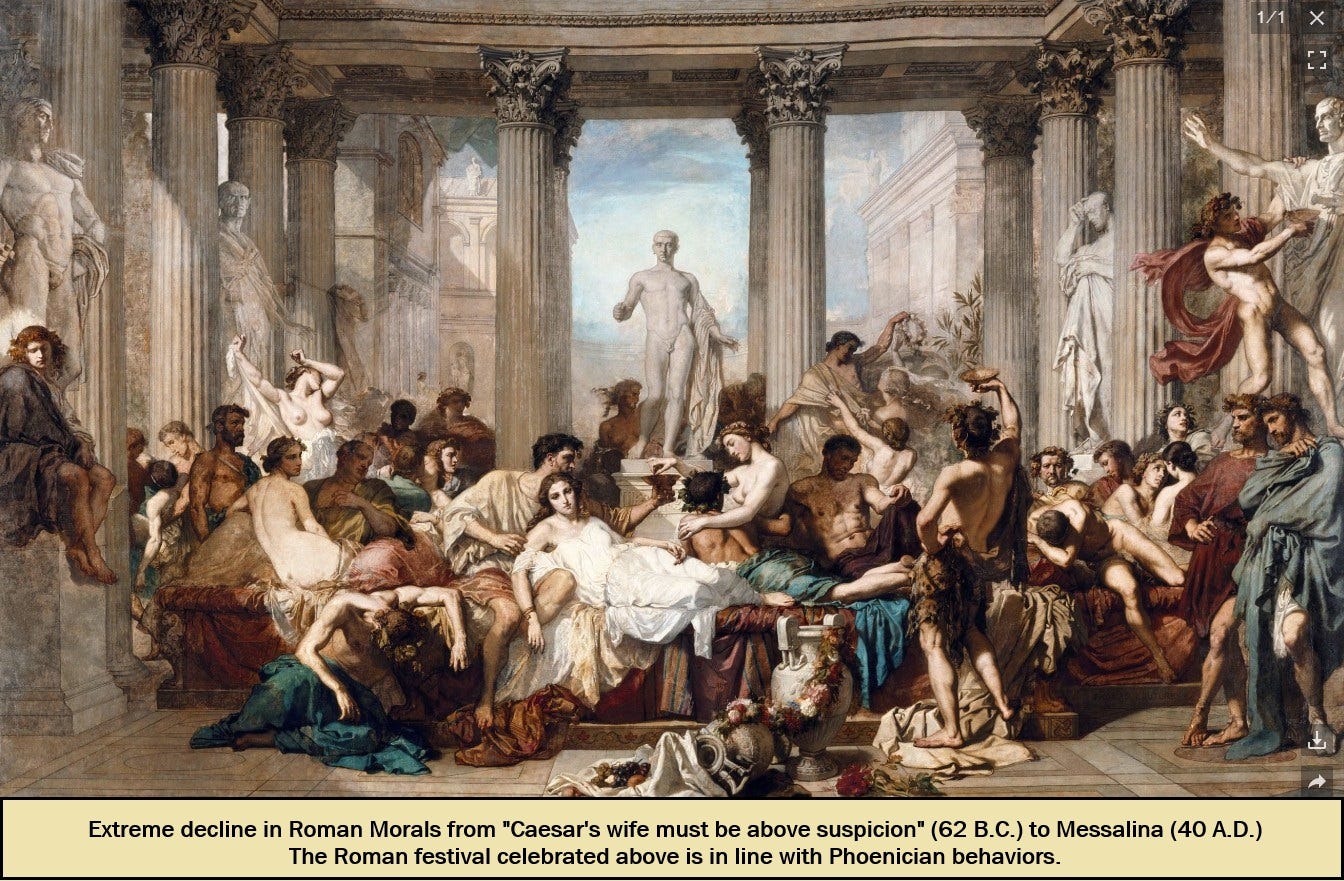
Conventional historians falsely infer that the Punic Wars ended Phoenician domination of trade. But in truth, the Phoenician network remained as powerful as ever. All the Phoenicians had to do to maintained their control was to bribe Roman leaders, make alliances with Roman generals, and learn to conduct trade in Latin.
What is presented in histories as the Roman Empire, was really just a rebranded, Latinized, Phoenician Empire, run almost entirely by the “Equestrian” class—that is, crypto-Phoenicians and wealthy plebeians, many of whom were not even Italian.
Phoenicians Among us (Part II)—Podcasts
Understanding how the Phoenician Empire morphed into the Roman Empire, and how historians lie to us about this by carefully “controlling the narrative” is the subject of the Second Video in the Phoenicians Among Us Series.
Instead of explaining how Phoenicians assumed control of the Roman Empire in a chronological, narrative manner, Mrs. Heritage History takes a “preponderance of evidence” approach. She highlights overwhelming proof of Phoenician influence over Roman government throughout the first 250 years of the Imperial age.
Once you recognize signs of Phoenicians control of Imperial Rome, it is easier to see how almost all the Roman heroes of the “populares” party during the first century B.C. really acted as traitors to the Roman Republic. And one need only consider the treachery of America’s current national leaders to see the parallels.
Topics covered are as follows:
10:00 Review of Ancient Phoenician Maritime Empire
33:00 Review of Julius Caesar—Made Man
38:00 Leading Indicators of Phoenician Influence
50:30 Explicitly Phoenician Severan Dynasty (193-235 AD)
59:30 Phoenician-Roman Hispania, very important
1:13:00 Five Good Emperors, Maternal Line, Hercules (98-192 AD)
1:23:00 Roman Orgies, Julio-Claudian Dynasty (27 BC-68 AD)
1:27:30 Julio-Claudian Dynasty
1:30:50 Equestrian Class Rise to Power, from 200 BC (Very Important)
1:44:20 Indicators: Latifundia, Architecture, Baths, Literature, etc.
1:49:30 Voting Rights for “Italians”—Gracchi to Caesar—Key to Empire
2:01:30 Phoenician Cults: Mithras, Cilician Pirates,
2:14:00 More Cults: Cybele, Bona Dea, Isis, Serapis
Key Points from Phoenicians Among us (Part 2):
— During the Punic Wars, many Phoenicians colonies “turned against Carthage” and allied with Rome. They learned Latin, bribed Roman officials, and appeared helpful while plotting against Roman leadership.
— Most crypto-Phoenicians were of the Equestrian class. Equestrians were “wealthy” plebians, and by the age of Augustus, the took complete control of the Roman Empire including trade, tax-collection, and administration.
— Many men who are presented as “Roman heroes” of the Populares party were crypto-Phoenician traitors. Among them are Julius Caesar, Marius, Cinna, the Gracchi, Crassus, Drusus. Augustus, Agrippa, and Maecenas.
— Many Phoenician cults and secret societies became active in Rome during Imperial times: Cybele, Bona Dea, Mithras, Isis and Serapis among others.
— Most of the Imperial Age Roman dynasties descended through the female line. Matrilinear descent is a sign of Phoenician influence.
More Information about the Fall of the Republic
The Phoenicians Among Us (Part II) podcast focuses mainly on the history of the Roman Empire after the fall of the Republic. It does not walk, step-by-step, through the sixty years of treachery and civil wars (91 to 31 BC), prior to the fall.
For that reason, people who are are interested in the how Romans lost control of their country, may be interested in Heritage History’s Phoenician-Roman Empire page, in the Hidden History section. It does not provide a complete history of the fall of the Roman Republic, but offers short biographies of some of the key traitors who delivered Rome into Phoenician hands.
Part III: Phoenician Empires after the Fall of Rome
The implications of Phoenician influence in world government and cultural institutions in the centuries following the Roman era are too huge to review in a single article. All we are attempting to do here is to provide the “big picture”. That is, essential information about who the Phoenicians are, and how they can be identified behind the scenes throughout the history of Western Civilization.
It is obvious that Phoenician merchant and banking networks were active during the Roman Imperial age. It is also clear that they appear to have gone underground about the time the Roman Empire became Christianized in the 4th century AD. From that point on, Phoenician rituals continued to be practiced in secret among crypto-Phoenician cults (Knights Templars, Jesuits, Jews, Assassins, etc.), merchant guilds (Mercers, Goldsmiths, etc.), and other secret societies (Druids, Gnostics, Vehm, Rosicrucians, Freemasons, etc.).
Virtually all Maritime Empires of the Middle Ages had Phoenician roots, including Venice, Genoa, Aragon, Portugal, Flanders, and the Hansaetic Leage in the Baltics. And the Crusaders,—who failed to hold onto Jerusalem, but succeeded in establishing successful trading colonies—were also crypto-Phoenicians. And following Columbus’s discover of the Americas, the vast mineral wealth of the New World, and trade with the Spanish Empire, were entirely in crypto-Phoenician hands.
None of these connections are easily explained. But as we gather together the evidences, and focus on different periods of history, we intend to post additional articles and videos. In the meanwhile, on Heritage History’s Advanced Research page, we’ve provided tools for helping readers recognize the influence of crypto-Phoenician Secret Socieites in history.
From Sephardim to the Anglo-American Empire
It is impossible to trace the activities of every network of Phoenicians throughout history, but there is one group of enormous interest to anyone who wants to understand Phoenician influence in the United States. These are the Sephardim of Spain, and it is this group that Peter Duke and MHH have focused recent podcasts on.
The Article Let’s Talk About Phoenicians and Separdic Jews references two podcasts that discuss why the Separdim are so important and how they influenced the settlement of the New World. A short review of Jewish immigration to England and America is also given.

We’ll continue to update this article and add more links, as we gather more information about the Hidden Phoenician Hand in History.
Phony Phoenicians phonetic phone.
As a sign language user, I had to go through speech therapy in secondary school. It was a struggle because I kept thinking how the language in English is shaped by phonetics, and all the words looked and sounded the same, thereby casting a spell on people (spelling is called spelling for a reason). Sign language users have been heavily targeted by the Phoenicians throughout the ages because their spells wouldn’t work on us, and we have a gift to give to you which is sign language, breaking their spell.
Subscribed (though there is a hidden meaning within that word) :)
Keeping of secrets was connected to Mithraism in the militaries. Mitra was the Vedic god of contracts. Mithra was the later Zoroastrian god of the covenant, and right hand man of Ahura Mazda (the one god) who went ape shit on anyone who broke an oath. Secret Societies abuse the oath in the same sense of Terms of Service, leaving initiates stuck in a system where they rightfully fear unwinding a false oath.